Reading Time: 6 minutes | Who This Blog Is For: This article is for adults in Vancouver, WA who live with recurring migraines and feel frustrated because they’ve tried managing individual symptoms—pain, nausea, light sensitivity—yet the migraines keep coming back. If you’ve been wondering why migraine symptoms won’t go away, or why migraines keep returning even when you’re doing “all the right things,” this blog is meant to help you make sense of that experience.
Have you ever felt like you were making progress—only to have a migraine return and undo your confidence?
Maybe the pain isn’t as intense as it used to be, but it still shows up. Maybe medication helps one symptom but leaves others untouched. Or maybe you find yourself constantly adjusting your life around migraines, even when you’re technically “doing better.”
This is often the moment people start asking deeper questions:
These questions are valid. And they’re more common than you might think.
Migraines are rarely just one thing. Pain, nausea, visual changes, neck tension, and fatigue often show up together—but they don’t always come from the same place. When care focuses on reducing one symptom at a time, it can bring temporary relief without addressing the underlying patterns that allow migraines to keep returning.
This doesn’t mean symptom management is wrong. It means it may not be sufficient on its own.
For many people, migraines behave more like a system-wide response than a single malfunction. That’s why progress can feel partial—better in some ways, stalled in others.
One pattern that often deserves closer attention is the migraine and neck pain connection. Many people with migraines also experience:
The upper neck plays a key role in posture, head position, and how the nervous system communicates with the rest of the body.
When this area is under ongoing strain, it can contribute to patterns that keep the system more reactive than it should be.
This doesn’t mean the neck “causes” migraines. But for some people, unresolved neck tension may be one of the factors that makes migraines harder to fully resolve.
This is often why people begin looking for a migraine chiropractor in Vancouver WA—not because they want someone to chase headaches, but because they want someone to evaluate how structural stress might be contributing to recurring symptoms.
One of the most discouraging experiences for migraine sufferers is doing everything right and still having symptoms return.
This can happen when:
In these cases, treating one symptom at a time may reduce intensity, but not eliminate the cycle. The body may still be operating in a state that makes migraines more likely to resurface.
Understanding this can be a relief—not because it simplifies migraines, but because it explains why your effort hasn’t been wasted, even if the outcome hasn’t been complete yet.
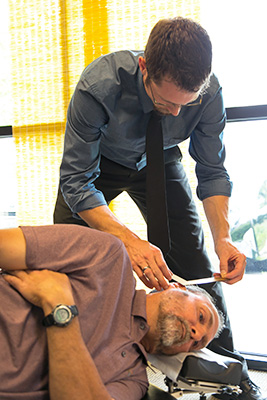
Working with a Vancouver chiropractor for migraines often means taking a step back and looking at the whole picture: posture, spinal alignment, movement patterns, and nervous system balance.
At Balanced Living Chiropractic, care is centered on understanding how the body is functioning as a system—not just where symptoms appear. The goal isn’t to promise a cure or replace other forms of care. It’s to explore whether structural and neurological stress may be contributing to why migraine symptoms won’t go away.
For many people, this approach feels different because it’s thoughtful, unhurried, and grounded in listening.
Life in Vancouver often means balancing work, family, and daily responsibilities while staying active and engaged. When migraines interfere, they don’t just cause pain—they quietly reshape how you plan your days.
Seeking Vancouver chiropractic care gives many patients something they’ve been missing: continuity. They want a provider who knows their history, someone who looks beyond isolated symptoms and helps them understand what their body may be asking for.
If you’ve been asking yourself why migraine symptoms keep coming back—or why migraines keep returning even when you’re managing them carefully—you’re not failing. You may simply need a broader lens.
A consultation with a Vancouver chiropractor for migraines at Balanced Living Chiropractic is an opportunity to explore whether the migraine and neck pain connection could be part of your experience—and whether addressing that piece could help your body find more stability over time.
You don’t need to have all the answers before you reach out. Sometimes the most meaningful step forward is having a conversation that finally looks at the whole picture. Schedule your first consultation with our migraine chiropractors in Vancouver WA.

“Why do my migraines improve for a while, then come back again?”
This is one of the most frustrating patterns migraine sufferers experience. Often, it means your body is adapting but hasn’t fully stabilized yet. Stress, posture, sleep changes, or accumulated tension can push the system back into a reactive state — even when you’re doing many things right.
“Does it still count as progress if my migraines aren’t gone?”
Yes. Fewer migraines, lower intensity, or faster recovery are meaningful signs that your nervous system may be becoming less reactive. For many people, these shifts happen before symptoms fully resolve.
“Why do migraines so often come with neck and shoulder tension?”
The neck supports the head and plays a major role in how the nervous system processes movement and stress. When tension builds there over time, it can contribute to patterns that make migraines more likely to return — even if head pain feels like the main issue.
“I’ve tried many approaches already. How do I know what I’m missing?”
When migraine symptoms won’t go away, it’s often not about trying harder — it’s about looking from a different angle. Many people don’t realize how much structural strain or postural imbalance may be affecting their nervous system until it’s evaluated thoughtfully.
“When is it time to stop managing and start investigating?”
If migraines are still influencing how you plan your days, your work, or your family time — even if they’re less severe — that’s often a sign it’s worth exploring deeper answers instead of continuing to cope alone.
To schedule a consultation with Dr. Joe Perin, call our Vancouver office at 360-569-1740. You can also click the button below.

If you are outside of the local area, you can find an Upper Cervical Doctor near you at www.uppercervicalawareness.com.