Reading time: 6 minutes | Who this blog is for: Anyone in Vancouver, WA who’s been in a car accident — whether it happened last week or years ago — and is now dealing with stubborn back pain, neck stiffness, or strange fatigue they can’t quite explain. If you’ve walked away from a crash only to feel worse later, this story might sound familiar.
Maybe it happened on a rainy stretch of Mill Plain. Or during rush hour on I-205. A rear-end accident, nothing dramatic. You stood up, moved around, and told the EMTs you were okay. You felt shaken, sure, but “fine.”
Until a few days passed. Then a few more.
Suddenly your neck felt stiff when backing out of your driveway. You started waking up with tightness in your shoulders, or dull aching across your lower back. At first it was subtle — easy to chalk up to tension or poor sleep. But it didn’t go away. In fact, it got worse.
By the time most patients come to us at Balanced Living Chiropractic, they’re frustrated. They’ve heard things like “everything looks normal” on scans, or “you just need rest.” But their body is telling a different story — one filled with daily discomfort, brain fog, and fatigue that doesn’t make sense.
And that’s when we start talking about the overlooked connection between whiplash and back pain.
It surprises many people to learn that pain from car accidents often shows up days or even weeks after the event. The body’s initial response — adrenaline, muscle bracing, and internal compensation — can mask injury. And the forces at play, even in a low-speed collision, can be enough to shift key structures in the neck.
When the head whips forward and back during impact, it often causes misalignment at the very top of the spine — particularly the atlas (C1) and axis (C2) vertebrae. These are the bones that hold the head in balance and protect the brainstem.
But what happens when they’re even slightly off?
The rest of the spine reacts. Muscles tighten to keep you upright. Nerves become irritated. Posture changes. And the pain doesn’t always stay in the neck — it can show up anywhere the body is overcompensating.
This is why whiplash and back pain are so often linked — especially when deeper structural imbalances haven’t been addressed.
After a collision, it’s common to feel like you should bounce back. After all, the accident was “minor,” right?
But even small misalignments can disrupt the body’s communication systems — especially when they involve the upper cervical spine. Over time, this can lead to:
The spine is one interconnected system. When the top of the spine (the neck) is off-center, it forces the rest of the body into compensation mode — which can put unusual stress on the lower back and hips. That’s one reason many patients are surprised when their back pain chiropractor in Vancouver WA focuses first on their neck.
Not all chiropractors in Vancouver WA adjust the upper neck — and that’s important, especially after a car accident.
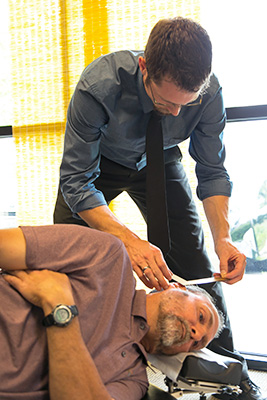
At Balanced Living Chiropractic, Dr. Perin and Dr. Wulff specialize in a very gentle and precise method known as upper cervical chiropractic care. They focus on the topmost neck bones – the atlas and axis and use advanced imaging to look these bones from multiple angles and identify misalignments that often don’t show up on standard scans.
The adjustments themselves are light-touch — so gentle that many patients wonder if anything happened at all. But once the top of the spine is back in balance, it can create a ripple effect throughout the entire body, relieving pressure and allowing the nervous system to reset.
That’s how we help people finally experience long-term relief from both whiplash and back pain — not just manage the symptoms.
Sometimes it takes months or even years before the effects of whiplash fully show up. The body is incredibly adaptive — until it runs out of ways to compensate.
We’ve seen patients who’ve tried everything: injections, medications, stretching, even surgeries — without answers. It’s not that they weren’t trying. It’s that the cause of their discomfort had never been properly identified.
This is why working with a Vancouver WA chiropractic team who understands the deeper spinal mechanics is so important after a car accident. You don’t have to be in a major collision to suffer long-term consequences. And you don’t have to wait for things to get worse before getting help.
Whether your pain started weeks ago or years after your crash, it’s not in your head — and it’s not something you just have to “deal with.” There may be a real, structural reason your body isn’t bouncing back the way it should.
At Balanced Living Chiropractic, we’re here to listen. To look deeper. To help you understand what’s really going on and what can be done about it. If you’ve been searching for relief after an accident — especially from whiplash and back pain — we’re here to support your healing.
Let’s find out if an upper cervical misalignment could be the reason your body hasn’t felt right since the crash. Book a consultation today.

1. How soon after an accident should I see a chiropractor?
Even if you feel fine after a crash, it’s smart to get checked within the first few days. Symptoms of whiplash and back pain can show up later, once adrenaline wears off and inflammation sets in. Early evaluation helps catch misalignments before they create long-term issues.
2. Why is my lower back hurting if the accident only involved my neck?
When the head and neck are suddenly whipped forward, it can shift the alignment at the top of the spine. That affects posture and movement patterns all the way down — especially in the low back and hips. A back pain chiropractor in Vancouver WA who focuses on spinal alignment can explain how these areas are connected.
3. What if my scans show nothing wrong?
Standard imaging may not catch subtle shifts in the upper cervical spine. At Balanced Living Chiropractic, we use precise imaging to assess the atlas and axis vertebrae — areas often missed but essential in understanding lingering symptoms.
4. Is the adjustment painful?
No. We use a very gentle and specific approach. There’s no twisting or cracking — just carefully guided corrections based on your unique anatomy. Many patients feel relaxed afterward, often with reduced tension or improved movement.
5. Can upper cervical care help if it’s been years since my accident?
Yes. Many people develop symptoms long after an accident. Whether it’s been weeks or decades, upper cervical care may still help reduce compensation patterns, relieve pressure, and support long-term recovery.
To schedule a consultation with Dr. Joe Perin, call our Vancouver office at 360-569-1740. You can also click the button below.

If you are outside of the local area, you can find an Upper Cervical Doctor near you at www.uppercervicalawareness.com.